
 Menu

 Your reliable partner for analytical equipment and consumables
Menu
Modern LC-MS workflows require high sensitivity, reliable automation, and maximum utilization of mass spectrometry instrumentation. Specialized Thermo Scientific™ online and multichannel systems provide different approaches to analytical automation, increased sample throughput, and reduced processing time for large sample batches.
Solutions within this category include automated LC-MS platforms, multichannel UHPLC, and technologies for direct coupling of high-efficiency separation systems with mass spectrometry.
Thermo Scientific™ Transcend™ LX Multichannel UHPLC Systems utilize two or four independent LC channels with a single mass spectrometer, optimizing MS utilization and enabling significantly increased throughput for high-volume LC-MS analysis.
Other specialized platforms within the category provide additional capabilities for workflow automation, low sample consumption, and direct integration of high-efficiency separation with subsequent MS detection.
By combining automation, high-efficiency separation, and mass spectrometric detection, these solutions enable productive analytical workflows for pharmaceutical and biopharmaceutical research, bioanalysis, proteomics, and other applications requiring high sensitivity and high sample throughput.
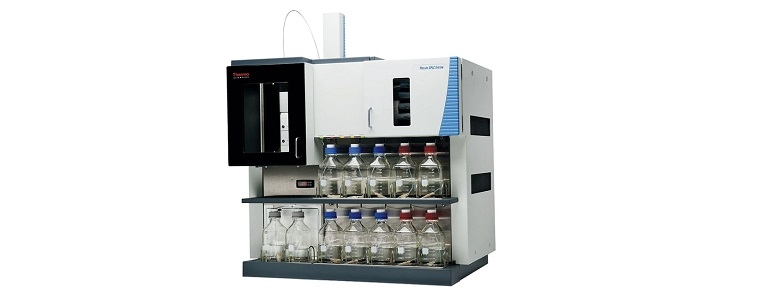
Thermo Scientific™ Prelude SPLC™ System is an automated parallel liquid chromatography system designed to increase throughput in LC-MS analysis. Using two independent LC channels, the system enables parallel sample processing and more efficient mass spectrometer utilization while providing reliable and reproducible analytical results.
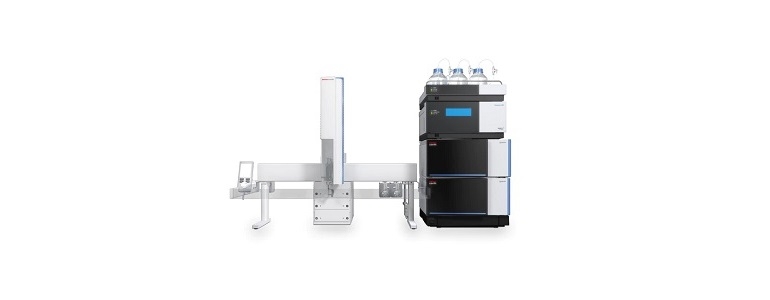
Thermo Scientific™ Transcend™ LX Multichannel UHPLC Systems are high-throughput multichannel UHPLC systems designed to maximize mass spectrometer utilization in LC-MS analysis. By combining two or four independent LC channels with a single mass spectrometer, Transcend LX can significantly increase throughput without requiring additional MS systems.
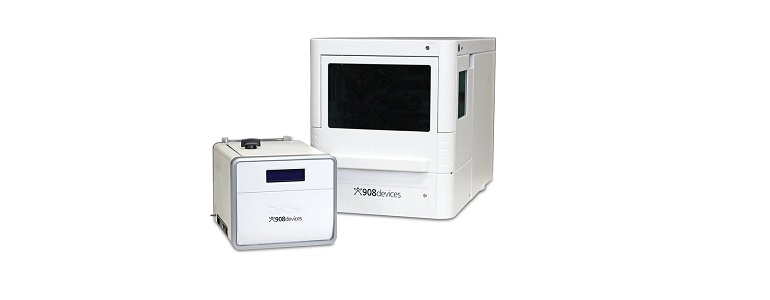
908 Devices ZipChip® Interface is a compact microfluidic capillary electrophoresis system that provides direct coupling to mass spectrometry through electrospray ionization (CE-ESI-MS). The technology enables fast, high-efficiency separations with minimal sample consumption and is well suited for the analysis of biomolecules, including proteins, peptides, metabolites, and other charged compounds.